
Character Of The Issue – Requirements
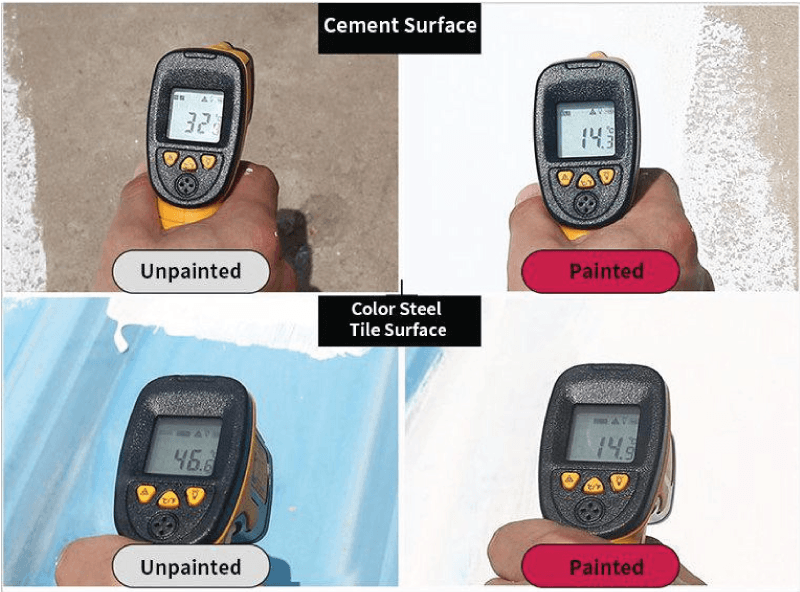
Without proper insulation or reflective solutions, flat roofs are at risk of thermal shock from temperature fluctuations, leading to weakened joints and potential leaks. UV exposure can dehydrate the roofing membrane, causing brittleness and blistering, which shortens its lifespan. Financially and environmentally, unprotected roofs act as heat conductors, raising indoor temperatures and increasing air conditioning costs while straining HVAC systems. This heat can also cause internal condensation and mold growth, compromising air quality and structural integrity.
SOLUTION
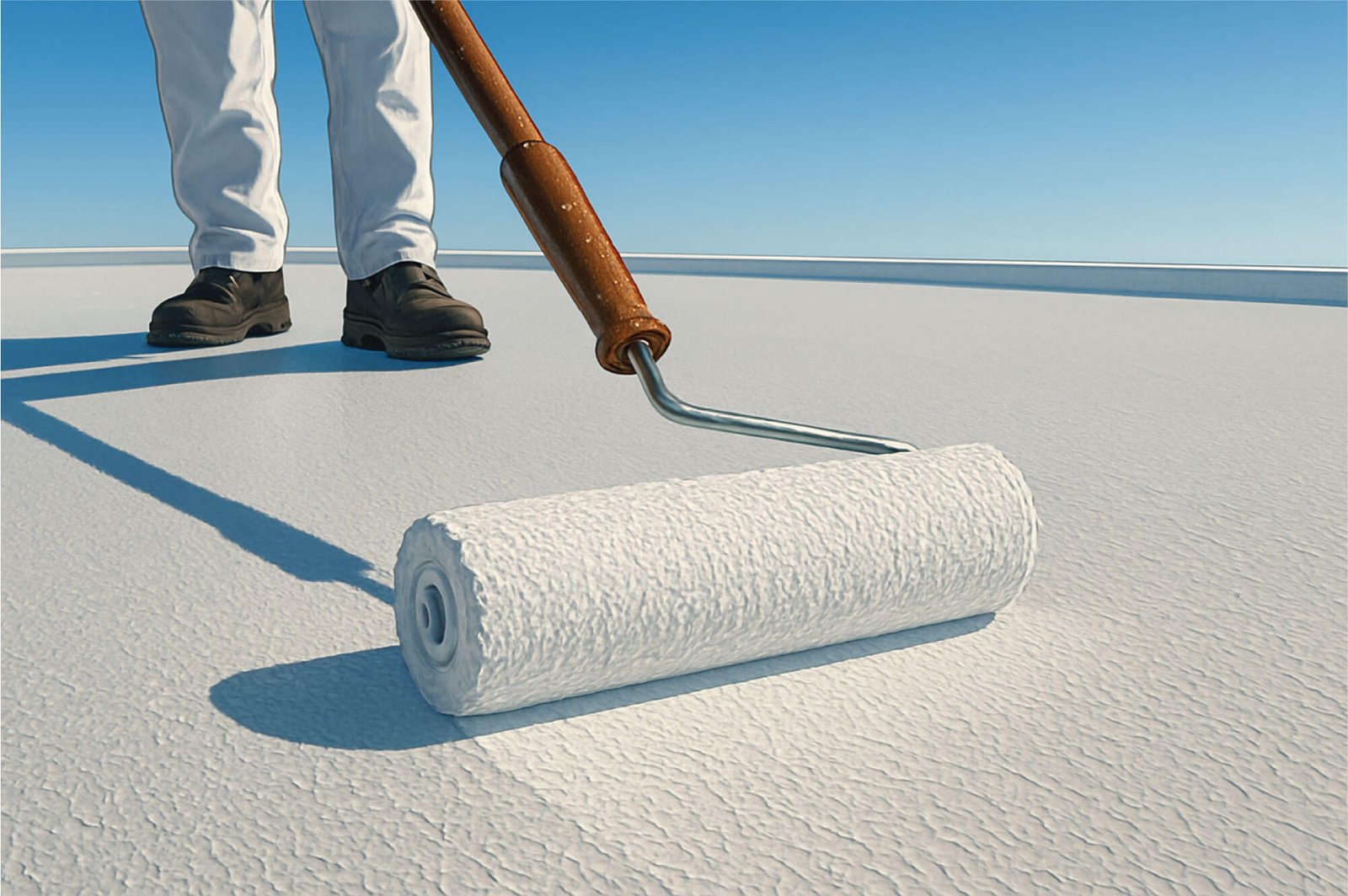
The requirements are thoroughly addressed by the one-component acrylic solar-reflective liquid membrane, PC-Sealcoat® SR. This product creates a continuous, elastic membrane distinguished by its exceptional mechanical strength and absence of joints or seams. It is ideally suited for universal waterproofing and thermal insulation of roof surfaces, as well as for meeting localized heat insulation requirements. Notably, it exhibits high resistance to standing water, making it particularly effective for flat roofs that may experience such conditions due to inadequate slope.
Application
Preparation of the substrate
The substrate must be dry, with a moisture content of less than 4%, and free from loose particles, dust, grease, and other contaminants. Local restorations or repairs of roof elements, such as concrete and cement mortar, should be executed using polymer-modified, fiber-reinforced PCC R3 cement mortar, specifically PC-Conrend® HS RM.
If any concrete cracks are present, they should be cut into a V-shape, and PC-Crack Seal® Paste should be applied. For structural cracks that could compromise the integrity of the overall structure, the PC-WC injection repair system should be utilized.
Surface Priming
After the smoothing materials have dried, apply the one-component, acrylic-based primer, PC-Prime® AC, to a clean and dry concrete surface with moisture content below 4%. For a uniform application, utilize a brush, roller, or spray, ensuring a recommended coverage of 200–300 g/m².
After applying the primer coat, allow it to achieve a touch-dry state for approximately 2 to 3 hours. Next, stir the PC-Sealcoat® SR to ensure a smooth and homogeneous consistency. Apply it horizontally using a soft nylon brush, roller, or by squeezing it to achieve a thickness of 125 to 150 microns in a single coat. Allow the applied coat to dry for approximately 4 to 5 hours. Once the first coat is adequately dry, proceed to apply the second coat vertically. Typically, two coats suffice for general applications, resulting in a total thickness of 250 to 500 microns DFT. However, in severe conditions, it is advisable to apply three or more coats to achieve the desired results.
REMARKS
To prevent punctures, avoid dragging reinforcement rods and other sharp materials over the PC-Sealcoat® SR. Additionally, it is essential to use PC-Sealcoat® SR in its undiluted form.
When applying the coating, do not exceed a thickness of 200 microns in a single application. For thicker coatings, it is advisable to apply multiple layers.
After the final application of the coating, allow a minimum of 6 to 8 hours before exposing it to rain. Furthermore, conduct a 24-hour pond test 72 hours after the final coating application.
DOWNLOADS
Waterproofing Solutions
Cool Roof
