
Concrete Defects and Structural Interruptions
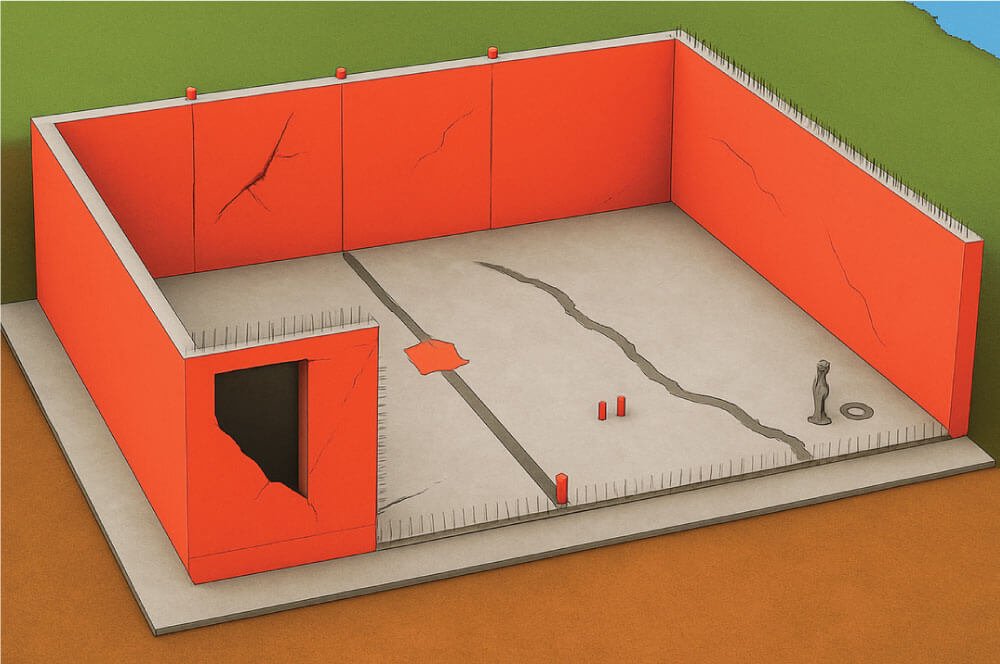
Water leakage in concrete walls mostly occurs through cracks, construction joints, honeycombs, and service pipe penetrations. These weak areas create direct paths for water to enter the structure.
Even when concrete is designed to be water-resistant, poor workmanship, improper compaction, or casting interruptions can create defects. Any inconsistency in the concrete reduces its resistance to water and may lead to long-term structural damage.
Natural Porosity of Building Materials
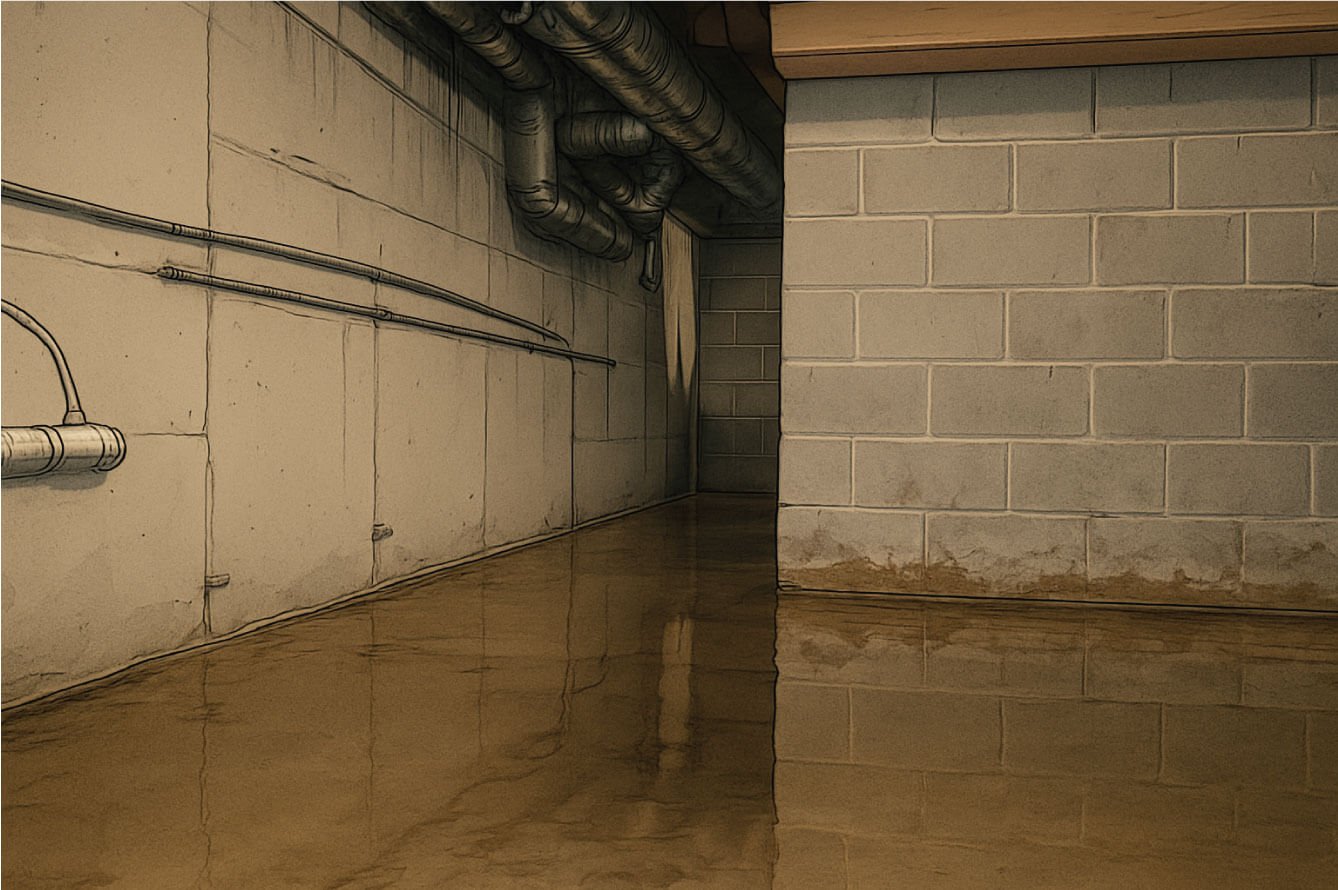
Masonry materials such as bricks and blocks naturally contain tiny pores that absorb and transmit moisture. Over time, this allows water to penetrate walls, especially in damp or rainy conditions.
When moisture combines with salts, it accelerates surface damage, paint peeling, mould growth, and structural deterioration. Damp walls not only affect indoor comfort but can also weaken foundations. Effective waterproofing treatment is necessary to protect buildings from these risks.
Waterproofing Renovation Of Concrete Walls
External (positive-side) Waterproofing Of Masonry Walls
Curtain Injection Waterproofing Of Masonry Walls
Internal (negative-side) Waterproofing Of Masonry Walls
DOWNLOADS
Waterproofing Solutions
Basements Renovation
